
A new garage door can make a noticeable difference in your home’s appearance, convenience, and everyday functionality. Whether you are replacing an outdated door or installing a garage door for the first time, understanding the installation process can help you feel more confident before the work begins.
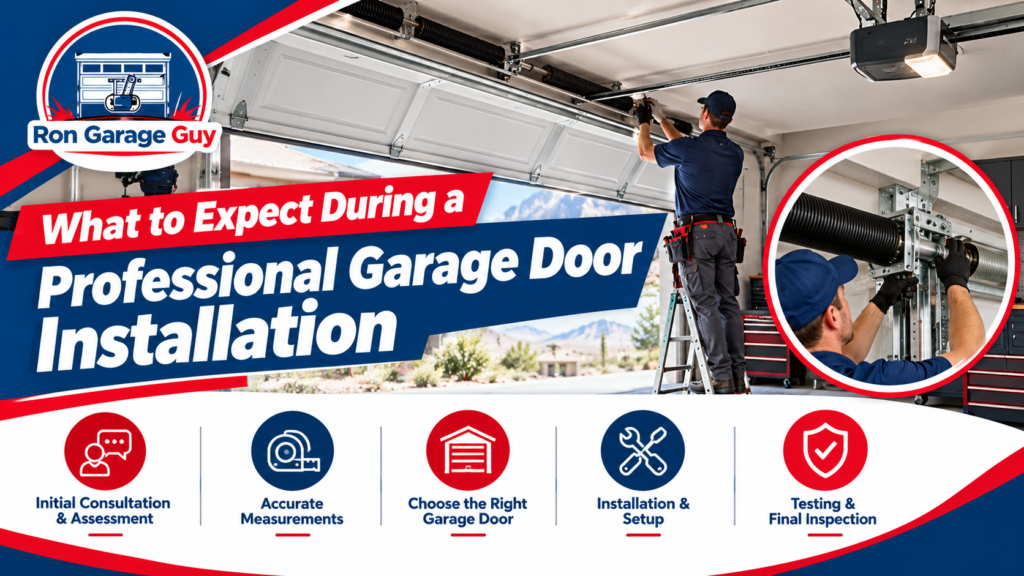
Professional garage door installation involves much more than attaching panels to an opening. The process includes evaluating the garage structure, taking accurate measurements, selecting a compatible door, preparing the installation area, assembling the hardware, and testing the completed system.
Every component must work together correctly. Tracks guide the door, rollers support its movement, springs help counterbalance its weight, and the opener provides automated operation when included. Incorrect installation or incompatible components can affect performance and create safety concerns.
For homeowners in Surprise, AZ, knowing what to expect can make planning a garage door project easier. Ron Garage Guy provides garage door installation services with attention to measurements, door selection, hardware compatibility, alignment, and operating performance.
In this guide, we explain each stage of a professional garage door installation, discuss common preparation requirements, and share what homeowners should check before considering the project complete.
Initial Consultation and Project Assessment
A professional garage door installation typically begins with a conversation about your needs and an evaluation of the garage.
Before recommending a door, the installer needs to understand the property’s layout, the condition of the opening, and how the garage will be used.
During this stage, you can expect to discuss several important details.
Your Garage Door Requirements
The installer may ask whether you are:
- Replacing an existing garage door.
- Installing a door in a newly constructed garage.
- Upgrading from a manual door to an automatic system.
- Changing the appearance of your home’s exterior.
- Looking for improved insulation or durability.
- Installing a door for residential or commercial use.
These details help determine which door configurations and operating systems may be suitable.
Existing Garage Door Condition
If you are replacing an existing door, the installer may evaluate its condition and identify components that could affect the new installation.
This may include examining the tracks, mounting brackets, springs, cables, rollers, and opener.
For example, damaged tracks may need attention before a new door can operate correctly. If the existing door is already moving unevenly or has come out of alignment, the cause should be identified rather than covered up by installing new panels.
Depending on the condition, additional work such as garage door track repair or garage door off-track repair may be necessary.
A proper assessment helps establish the scope of work before installation begins.
Accurate Garage Door Measurements
Measurements are among the most important parts of the installation process. A door must fit the opening and have enough surrounding clearance for the tracks, springs, hardware, and operating mechanism.
An incorrectly sized door can cause alignment issues, gaps, restricted movement, or installation complications.
Measuring the Garage Opening
The installer typically evaluates:
Opening width: The horizontal distance across the garage door opening.
Opening height: The vertical distance from the floor to the top of the opening.
Headroom: The available space above the opening for tracks, springs, and related hardware.
Side clearance: The available space on either side of the opening for vertical tracks and supporting components.
Backroom: The depth available inside the garage for the door to travel when opening.
These measurements help determine which door configuration and track arrangement are appropriate.
Checking Structural Support
The surrounding garage structure also matters.
The installer may inspect the areas where tracks, brackets, and supporting hardware will be mounted. These surfaces must be suitable for securing the system.
If the opening has structural irregularities or insufficient support, those concerns may need to be addressed before installation can proceed.
For homeowners, this step helps reduce the likelihood of unexpected fitting problems later in the project.
Choosing the Right Garage Door
After the measurements and initial assessment, the next step is selecting a door that fits your garage and preferences.
Garage doors are available in different materials, styles, finishes, insulation levels, and configurations. The right choice depends on your budget, property design, maintenance expectations, and everyday usage.
Garage Door Materials
Some common options include:
Steel garage doors: Steel is a popular choice because it offers durability and is available in many designs and finishes. Insulated and non-insulated options are available.
Wood garage doors: Wood provides a traditional appearance and can complement many architectural styles. Maintenance and cost depend on the type of wood and finish.
Aluminum garage doors: Aluminum doors can provide a contemporary look and are often selected for modern properties. Construction quality and design influence their strength and performance.
Composite garage doors: Composite materials can offer the appearance of natural materials with different maintenance characteristics. Product construction varies by manufacturer.
The best material is the one that suits your property’s appearance, operating needs, and maintenance preferences.
Garage Door Styles and Designs
A garage door can occupy a substantial part of a home’s exterior, so its design matters.
Homeowners may consider:
- Traditional raised-panel designs.
- Contemporary flush-panel doors.
- Decorative window arrangements.
- Different colors and finishes.
- Wood-look designs.
- Custom panel configurations.
A suitable design can complement the home’s architecture while providing the functionality required for regular garage access.
Insulation Options
Insulation is another factor to consider, particularly for attached garages or spaces used for storage and other activities.
Insulated doors may help reduce heat transfer and outside noise. Their performance depends on the door’s construction, insulation material, sealing, and installation quality.
The installer can help you understand which options are appropriate for the garage and how they may affect the overall project.
Reviewing the Estimate and Installation Plan
Before work begins, homeowners should understand what the installation includes.
A clear estimate helps avoid confusion about materials, labor, equipment, and additional work.
Depending on the project, the estimate may cover:
- Garage door panels and sections.
- Tracks and supporting brackets.
- Rollers and other hardware.
- Spring and cable components.
- Door removal and disposal, if applicable.
- Garage door opener installation, if selected.
- Labor and installation.
- Additional preparation or repair work.
It is also helpful to confirm the expected project timeline and whether any special-order components are required.
If you are comparing options, you can review the garage door installation service offered by Ron Garage Guy and discuss the requirements of your property before scheduling.
Preparing the Garage for Installation
Once the project details are confirmed, the installation area needs to be prepared.
Homeowners can make the process easier by clearing the space around the garage door.
Move Vehicles and Stored Items
Remove vehicles, bicycles, tools, storage containers, and other objects that could obstruct the work area.
Installers need sufficient room to handle door sections, hardware, and equipment safely.
Clear the Area Around the Opening
Move items away from the interior and exterior sides of the garage door opening.
This provides better access to the tracks, mounting surfaces, and installation points.
Keep Children and Pets Away
Garage door installation involves heavy materials, tools, and mechanical components.
Children and pets should remain away from the work area until the installation and testing are complete.
Discuss Electrical Requirements
If an automatic opener is part of the project, the installer may need to consider the available electrical connection and the placement of the opener and safety sensors.
Any electrical work beyond the installation scope should be discussed before the project begins.
Proper preparation helps the installation team work efficiently while reducing avoidable interruptions.
Removing the Existing Garage Door
If you are replacing an old garage door, the existing system usually needs to be removed before the new one can be installed.
This stage requires particular attention because garage doors can be heavy and their spring systems may remain under substantial tension.
Disconnecting the Existing Opener
If the old door is automated, the opener must be disconnected according to the equipment’s requirements.
The installer also evaluates whether the existing opener is compatible with the new door or whether a new unit is needed.
Handling Springs and Cables
Springs and cables support the door’s movement and balance. These components can be dangerous if handled incorrectly.
A trained professional should manage the removal and replacement of spring-related hardware.
If new springs are required, the installer must select components suitable for the door’s weight and configuration.
Learn more about garage door spring replacement.
Removing Door Sections and Hardware
The old panels, tracks, rollers, brackets, and other components are removed as required by the project.
Once the opening is cleared, the installer can check the mounting surfaces and prepare for the new system.
Not every project requires the same removal procedure. The exact process depends on the existing door and its construction.
Installing the New Garage Door Tracks
Tracks guide the garage door as it moves between its open and closed positions.
Their placement and alignment are essential for proper operation.
Positioning the Vertical Tracks
Vertical tracks are installed along the sides of the garage opening.
They guide the door sections as they move upward from the closed position.
The installer checks the positioning and mounting points to ensure the tracks are appropriately secured.
Installing the Horizontal Tracks
Horizontal tracks extend into the garage and guide the door as it moves toward the open position.
The arrangement depends on the door system and available ceiling clearance.
Checking Track Alignment
Misaligned tracks can contribute to noisy movement, binding, uneven travel, and other operating problems.
The installer checks the track arrangement and supporting hardware to help ensure the door can move through its operating path.
If an existing track is bent, damaged, or unsuitable for the new door, it may need to be replaced rather than reused.
For more information about related problems, visit the garage door track repair service.
Assembling and Installing the Garage Door Panels
Once the track system is prepared, the door sections can be assembled and positioned.
The exact procedure varies by door model and manufacturer instructions.
Positioning the First Panel
The bottom section is generally positioned first because it establishes the starting point for the rest of the door.
The installer checks that it sits correctly within the opening.
Adding the Remaining Sections
Additional sections are installed in sequence and connected using the appropriate hinges and hardware.
The installer checks the connections and positioning as the door takes shape.
Installing Rollers and Hinges
Rollers allow the door sections to travel through the tracks.
Hinges connect the sections and allow the door to bend as it follows the track path.
The correct hardware and positioning help support smooth movement.
Checking Panel Alignment
The assembled door should fit the opening properly and move without unnecessary resistance.
The installer checks the panel arrangement, connections, and clearances before moving on to the balance and operating components.
If an existing door only has isolated panel damage, full replacement may not always be necessary. Depending on the model and availability of compatible sections, garage door panel replacement may be an alternative worth discussing.
Installing the Spring and Cable System
Springs and cables are essential parts of a garage door’s lifting mechanism.
The spring system helps counterbalance the weight of the door, allowing it to open and close without placing excessive strain on the operating components.
Understanding Garage Door Springs
Two common spring configurations are:
Torsion springs: These are typically mounted above the garage door opening and use twisting force to counterbalance the door.
Extension springs: These are generally positioned along the sides of the horizontal tracks and extend and contract during operation.
The correct configuration depends on the garage door system.
Selecting the Correct Spring
Spring selection must account for the door’s weight, dimensions, and operating requirements.
An incorrectly sized spring can affect the door’s balance and operation.
Installing and Adjusting Cables
Cables work with the spring system to support controlled door movement.
They must be correctly routed, secured, and configured according to the door system’s requirements.
Why Professional Installation Matters
Garage door springs store significant mechanical energy. Incorrect handling can result in serious injury or property damage.
Homeowners should never attempt to wind, loosen, or remove high-tension springs without the proper training and equipment.
Professional installation helps ensure the spring and cable system is configured for the selected door.
Installing the Garage Door Opener
If your new garage door will operate automatically, the opener must be installed and configured as part of the project.
The opener is responsible for moving the door when activated through a wall control, remote, or compatible smart device.
Choosing an Appropriate Opener
Several factors influence opener selection:
- Garage door size and weight.
- Door balance and hardware configuration.
- Available mounting space.
- Desired noise level.
- Frequency of use.
- Remote access and smart features.
- Compatibility with the selected door.
Common opener types include chain-drive, belt-drive, and screw-drive systems. Each has different operating characteristics.
Mounting the Opener
The opener is positioned and secured according to the manufacturer’s specifications.
The appropriate rail and connection hardware are installed to link the motor with the garage door.
Connecting Controls
Depending on the opener model, setup may include wall controls, remote transmitters, keypads, and smart connectivity features.
The installer can explain how to use the available controls and what features are included.
Setting Up Safety Sensors
Automatic garage door systems generally use photoelectric safety sensors near the bottom of the opening.
These sensors help detect obstructions in the door’s path and are an important part of safe operation.
They must be positioned and tested according to the opener manufacturer’s instructions.
For more information about this service, visit garage door opener installation.
Testing the Garage Door After Installation
Installation is not complete simply because the door is attached and the opener is connected.
The complete system needs to be checked to confirm that it operates properly.
Checking Door Balance
The door should be properly balanced by its spring system.
An unbalanced door may place additional strain on the opener and other components.
Testing Opening and Closing Movement
The installer operates the door through multiple cycles to observe its movement.
The checks may include:
- Smooth travel through the tracks.
- Consistent movement of the panels.
- Proper roller operation.
- Secure hardware connections.
- Appropriate opening and closing positions.
- Unusual noise or vibration.
Testing the Automatic Opener
If an opener is installed, its operation is checked using the available controls.
The installer may verify remote operation, wall-control response, travel limits, and other settings supported by the system.
Testing Safety Features
The safety sensors and applicable reversing functions should be checked according to manufacturer instructions and relevant safety requirements.
Homeowners should ask the installer to demonstrate the safety features and explain their purpose.
Final Visual Inspection
Before completing the project, the installer should review the door’s overall appearance and operation.
This helps identify installation issues that may need adjustment before the work is considered complete.
What Should Homeowners Check Before the Installer Leaves?
Once installation is complete, take a few minutes to review the finished system.
Ask the installer to demonstrate how the door works and explain any important maintenance requirements.
Here are some useful things to check.
Door movement: The door should open and close smoothly without unusual scraping, binding, or excessive vibration.
Panel alignment: The sections should appear properly connected and aligned.
Track positioning: Tracks and mounting hardware should be secure and appropriately positioned.
Opener operation: If an automatic opener is included, confirm that the wall control and available remotes work.
Safety features: Ask the installer to explain and demonstrate the safety sensors and applicable reversing features.
Manual release: If your system includes an emergency release, ask how it works and when it should be used.
Warranty information: Review the manufacturer’s warranty and any applicable installation or workmanship coverage.
Maintenance guidance: Ask which components need periodic inspection and which products or procedures are recommended by the manufacturer.
These checks help you understand your new garage door system and use it confidently.
How Long Does Professional Garage Door Installation Take?
The time required for garage door installation depends on the size and complexity of the project.
A straightforward replacement may take less time than installing a complete system in a new garage opening.
Several factors can influence the schedule:
- Door size and configuration.
- Material and construction.
- Existing garage structure.
- Condition of mounting surfaces.
- Track and hardware requirements.
- Opener installation.
- Custom features or special-order components.
- Additional repairs discovered during the assessment.
An installer can provide a more accurate timeline after reviewing the garage and selected door.
It is a good idea to keep the garage accessible during the scheduled appointment and avoid planning activities that require the door until the installation and testing are finished.
Common Problems That Can Affect a New Garage Door Installation
Even when homeowners select a quality door, problems can occur if the system is not properly matched to the garage.
Understanding common issues explains why professional assessment and installation matter.
Incorrect Measurements
A door that does not match the opening can create fitting difficulties, gaps, or clearance problems.
Accurate measurements should be confirmed before ordering or installing the door.
Misaligned Tracks
Track misalignment can cause uneven movement, resistance, or excessive noise.
Proper positioning and secure mounting are important for reliable operation.
Incorrect Spring Configuration
Springs must be suitable for the door’s weight and design.
An incorrect setup can affect balance and place unnecessary stress on the system.
Incompatible Opener
An opener must be appropriate for the door and its operating requirements.
A mismatch may contribute to poor performance or excessive strain.
Reusing Damaged Components
Existing hardware should not automatically be reused simply because it is already installed.
Tracks, rollers, springs, brackets, and cables should be evaluated for condition and compatibility.
If a component is damaged or unsuitable, replacement may be necessary.
How to Maintain Your New Garage Door
After installation, regular attention can help keep the system operating properly.
Although maintenance requirements vary by door model, several habits are useful for most homeowners.
Keep the Tracks Clean
Dust and debris can accumulate around the track system.
Keep the area clear and follow the manufacturer’s recommendations for cleaning. Avoid applying grease or lubricant to track surfaces unless specifically instructed.
Listen for Unusual Sounds
Grinding, squeaking, rattling, or sudden changes in operating noise may indicate a developing issue.
Do not ignore repeated or unusual sounds.
Check the Door’s Appearance
Look for visible damage, loose weather seals, bent panels, or other changes.
Addressing problems early may help prevent additional damage.
Test Safety Features
Follow the manufacturer’s instructions for checking the safety sensors and reversing system.
If a safety feature does not work as expected, stop using the automatic system and arrange professional service.
Arrange Professional Maintenance
A professional inspection can help identify wear, alignment problems, and hardware concerns.
Do not attempt to adjust high-tension springs or cables yourself.
Professional Garage Door Installation in Surprise, AZ
Choosing the right installer is an important part of a successful garage door project.
Homeowners in Surprise, Arizona, need a system that fits their property, supports everyday use, and is installed with attention to the garage’s structural and mechanical requirements.
Ron Garage Guy provides garage door installation services in Surprise and nearby communities.
The company serves areas including:
- Surprise, AZ.
- Sun City, AZ.
- Sun City West, AZ.
- El Mirage, AZ.
- Peoria, AZ.
- Buckeye, AZ.
- Waddell, AZ.
- Goodyear, AZ.
- Litchfield Park, AZ.
Whether you are installing a new garage door, replacing an older system, or upgrading to automatic operation, the process should begin with an assessment of the opening and your requirements.
You can learn more about the company’s services by visiting Ron Garage Guy.
Why Choose Professional Installation Instead of DIY?
Some homeowners consider installing a garage door themselves to reduce labor costs. However, garage door installation involves heavy panels, specialized hardware, and high-tension components.
Professional installation offers several important advantages.
Correct Measurements and Door Selection
An installer can evaluate the opening and identify suitable door sizes, materials, and configurations.
Proper Hardware Compatibility
Tracks, springs, rollers, cables, brackets, and openers must work together.
Professional assessment helps ensure that the selected components are appropriate for the door system.
Safer Spring Handling
Garage door springs can cause severe injuries if handled incorrectly.
Professional installers have the training and equipment needed to work with these components.
System Testing
A professional installation includes checks of door movement, balance, alignment, opener operation, and safety features.
Guidance After Installation
Homeowners can receive practical information about the controls, safety features, warranty details, and maintenance requirements.
For these reasons, professional installation is generally the safer and more practical option for a complete residential garage door system.
Schedule Professional Garage Door Installation With Ron Garage Guy
A garage door is an important part of your home’s everyday access and security. Proper installation helps ensure that the door fits the opening, moves smoothly, and works with compatible tracks, springs, hardware, and opener components.
Understanding the installation process can help you prepare your garage, choose suitable materials, and know what to expect on installation day.
Ron Garage Guy provides garage door installation services in Surprise, AZ, with attention to accurate measurements, door selection, component compatibility, alignment, and final system testing.
Whether you are replacing an old garage door or planning a new installation, professional guidance can help you make a practical decision for your property.
Visit the garage door installation service page to learn more.
Frequently Asked Questions
1. What happens during a professional garage door installation?
The process generally includes an initial assessment, measurements, door selection, preparation, track installation, panel assembly, spring and cable setup, opener installation when applicable, and final safety and performance testing.
2. How long does professional garage door installation take?
The timeline depends on the door size, installation requirements, garage structure, hardware, and whether an old door needs removal. A straightforward project may take less time than a custom or more complex installation. Your installer can provide a project-specific estimate.
3. Do installers remove the old garage door?
When a new door is replacing an existing one, removal of the old door is generally part of the project. Confirm whether removal and disposal are included in your estimate.
4. Can I keep my existing garage door opener?
Possibly. The existing opener must be evaluated for condition, compatibility, and suitability for the new door. A new opener may be recommended if the existing unit is outdated, damaged, or incompatible.
5. What measurements are needed for garage door installation?
Important measurements include opening width, opening height, headroom, side clearance, and backroom. The installer may also check structural support and mounting surfaces.
6. Are garage door springs included in a new installation?
A complete garage door system requires an appropriate spring configuration. The exact components depend on the door’s weight, size, and design. The installation estimate should clarify which spring and hardware components are included.
7. Is professional garage door installation safer than DIY installation?
Professional installation is generally safer because garage doors are heavy and spring systems store significant energy. Trained installers have the equipment and experience needed to handle these components and test the completed system.
8. What should I do before the installation team arrives?
Move vehicles, tools, storage items, and other obstacles away from the garage opening. Keep children and pets away from the work area and make sure the installer has access to the garage.
9. Will my new garage door need maintenance?
Yes. Garage doors have moving components that experience wear through regular use. Follow manufacturer recommendations, monitor unusual sounds or movement, and arrange professional inspections when needed.
10. Does garage door installation include an automatic opener?
Not necessarily. Opener installation may be included as part of a selected package or quoted separately. Confirm whether the opener, controls, sensors, and related setup are included before the project begins.
Final Thoughts
Professional garage door installation is a step-by-step process that requires accurate measurements, suitable materials, compatible hardware, careful assembly, and proper testing.
From the initial inspection to the final safety check, every stage contributes to how well the door fits and operates.
For homeowners in Surprise, AZ, working with a professional installer can make the process easier while helping ensure that the new garage door meets the property’s requirements.
If you are planning a garage door upgrade, contact Ron Garage Guy to discuss your installation needs and arrange an assessment.