A garage door may seem simple from the outside, but several parts have to work together for it to open and close properly. With a manual door, that movement is handled by hand, so smooth operation and proper balance are especially important.
For homeowners replacing an old door or planning a new garage setup, understanding the manual garage door installation process can make the project easier to plan. From measuring the opening to fitting the tracks, panels, rollers, and counterbalance system, each stage has a role in the finished result. You can also see our full garage door installation service for other door types.
This guide covers the main things to know about manual garage doors, installation, safety, maintenance, and common problems.
Thinking About a Manual Garage Door? Start Here
A manual garage door does not use an electric opener or motor. Instead, the homeowner raises and lowers the door by hand.
That straightforward setup can work well for garages where powered operation is not necessary. However, the door still needs the right hardware and a properly balanced system to operate smoothly. If you want powered operation later, you can convert a manual garage door to automatic or compare it with automatic garage door installation.
How Manual Doors Work
Most sectional garage doors move upward along tracks as the panels fold into a horizontal position above the opening. Rollers guide the panels through the tracks while hinges allow the sections to move together.
Other door styles, such as roll-up garage doors, use different mechanisms, so the installation method depends on the specific design.
What to Check Before Choosing One
Start by looking at the garage itself. The opening needs to be measured carefully, including:
- Door width and height
- Headroom above the opening
- Side clearance
- Available backroom
- Condition of the surrounding structure
The door’s size and weight also affect the hardware required for installation. If you want a specific look or size, explore our custom garage doors.
The Parts That Make the Door Move
A garage door is made up of several components that work together. Knowing their basic purpose makes the installation process easier to understand.
Door Panels and Hinges
Sectional doors contain multiple panels connected by hinges. As the door opens, the hinges allow the sections to bend and follow the track system.
The panels need to be installed in the correct order and positioned properly for smooth movement. Damaged sections may need garage door panel repair before or after installation.
Tracks, Rollers, and Brackets
Tracks guide the door from the closed position toward the open position. Rollers fit inside the tracks and help the panels travel along them. Worn rollers can be handled through garage door roller replacement.
Brackets secure different parts of the system to the door and surrounding structure. Proper positioning matters because misaligned hardware can affect how the door moves.
Springs, Cables, and Counterbalance
The counterbalance system helps support the weight of the door during opening and closing. Depending on the design, this may include torsion or extension springs, cables, drums, and related hardware.
These components can be under substantial tension. Garage door spring repair and garage door cable repair should be handled by someone with the appropriate training and equipment rather than treated as a routine DIY adjustment.
Getting the Garage Opening Ready
Good preparation makes the installation process much easier. Before hardware is attached, the opening and surrounding surfaces should be checked.
Measure More Than the Doorway
Measuring only the width and height is not enough. The installer also needs to know how much room is available above and beside the opening.
These measurements help determine if the selected door and hardware can fit properly.
Check Headroom and Side Space
Tracks and springs require room to operate. Low headroom or limited side clearance can affect which hardware arrangement is suitable.
If an older garage has unusual dimensions, the installation plan may need to account for those conditions before the door is ordered.
From an Empty Opening to a Working Door
The exact sequence varies by door type and manufacturer, but a typical installation follows a series of planned steps.
Preparing the Area
Old doors, damaged hardware, loose materials, or other obstructions may need to be removed first.
The installer then checks the surrounding structure and identifies secure locations for mounting the new hardware.
Installing the Hardware
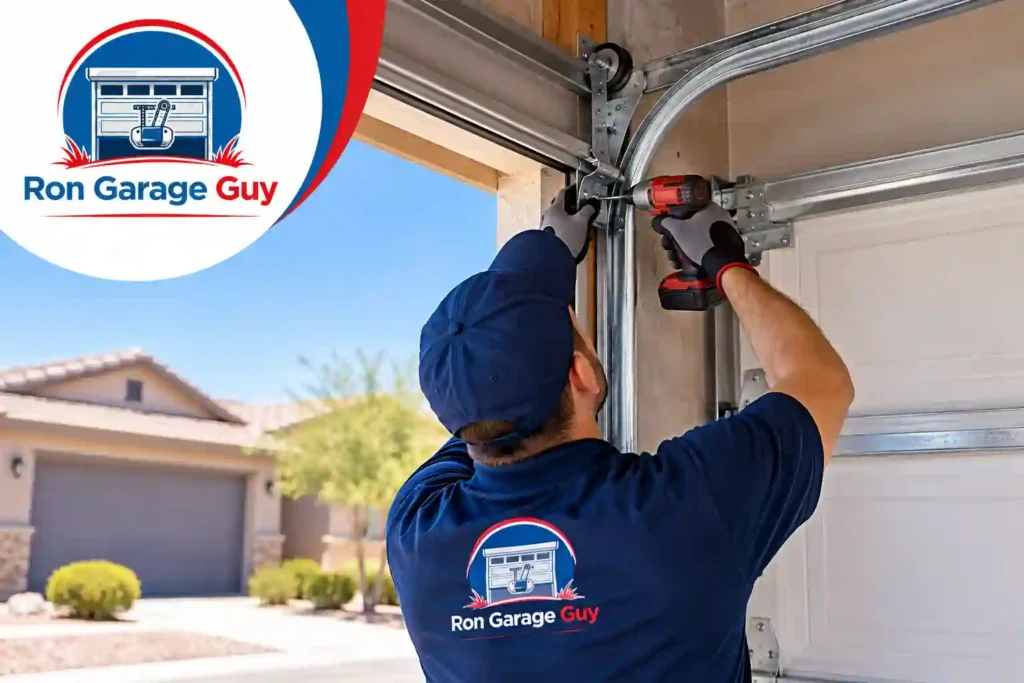
Tracks, brackets, rollers, hinges, and other components are installed according to the door’s specifications.
Keeping the hardware positioned correctly is important. Tracks that are too close, too far apart, or out of alignment can interfere with door movement.
Setting the Panels and Tracks
For a sectional door, the panels are assembled in the proper sequence and connected with hinges. Rollers are then placed into the tracks so the door can travel along its intended path.
At this stage, the installer checks that the sections and tracks line up correctly.
Completing the Balance System
The springs and cables are installed according to the manufacturer’s specifications for the particular door.
This is one of the most safety-sensitive parts of the job. Garage door springs store mechanical energy, so incorrect installation or adjustment can result in serious injury.
Testing the Finished Door
Once installation is complete, the door is operated by hand several times.
The installer checks for:
- Smooth movement
- Uneven travel
- Excessive resistance
- Track interference
- Unusual sounds
- Proper closing and opening
Any issue found during testing should be corrected before the installation is considered finished.
Small Installation Details That Make a Big Difference
A door does not need to be complicated to require careful installation. Small alignment issues can affect everyday operation.
Keeping Tracks Properly Aligned
The tracks need to remain correctly positioned so the rollers can travel through them without unnecessary friction or binding.
If a track appears bent or misaligned, it should be inspected rather than forced back into position.
Checking Door Balance
A properly balanced door should not feel unusually difficult to lift by hand. If it suddenly becomes much heavier or drops unexpectedly, the counterbalance system may need professional attention, and in urgent cases emergency garage door repair is the safest choice.
Do not attempt to adjust garage door springs without the appropriate expertise.
Making Sure Panels Move Smoothly
Watch the door as it travels. The panels should move together without catching, rubbing, or shifting noticeably from one side to the other.
Problems You Should Not Ignore
Changes in the way a garage door operates can provide an early indication that something needs attention.
A Door That Suddenly Feels Heavy
If a door that previously opened easily becomes difficult to lift, the problem may involve the springs, cables, rollers, tracks, or another part of the system.
Avoid repeatedly forcing the door open.
Scraping, Grinding, or Popping Sounds
New or unusually loud sounds can come from worn rollers, loose hardware, track problems, or other mechanical components.
The source should be identified before the issue becomes more serious.
Uneven Movement or Closing
If one side of the door moves differently from the other, the tracks, rollers, cables, or balance system may need inspection.
A door that does not sit evenly when closed should not simply be ignored.
Simple Care for Everyday Use
Routine attention can help you notice problems before they interfere with normal operation. Our garage door maintenance and garage door tune-up services cover this in more detail.
Keep an Eye on the Tracks and Rollers
Look for visible dirt, damage, or objects blocking the tracks. Rollers should also be checked for cracks, wear, or other visible problems.
Avoid changing track alignment yourself.
Watch for Worn Hardware
Hinges, brackets, rollers, and fasteners can wear over time. Loose or damaged hardware should be inspected and repaired as needed.
Notice Changes Before They Get Worse
Pay attention if the door becomes noisier, heavier, slower, or harder to close. A sudden change is worth investigating instead of continuing to use the door normally.
When Professional Installation Makes Sense
Installing a garage door involves more than assembling panels. The opening has to be measured correctly, hardware needs to be secured, tracks must be aligned, and the counterbalance system has to match the door.
Professional installation is particularly important when the project involves springs, cables, heavy door sections, or replacement of major hardware.
Experienced installation can also help identify structural or measurement issues before they create problems later. Learn more about our team, browse our project gallery, or view all garage door services.
Final Checks Before the Job Is Complete
Before using a newly installed door regularly, the entire system should be checked.
A final inspection should include:
- Door movement
- Panel alignment
- Track positioning
- Roller operation
- Hardware security
- Door balance
- Opening and closing
- Unusual noise or resistance
- Proper closed position
If the door does not operate as expected, it is better to stop and have the problem addressed than to force it through the movement.
FAQs About Manual Garage Door Installation
What makes a manual garage door a practical choice for Glendale, AZ homes?
A manual garage door can be a straightforward option for homeowners who prefer direct operation without relying on an opener. The right door design can provide convenient access while fitting the home’s exterior style and available garage space. See our Glendale, AZ garage door services.
Could a manual garage door be right for your Surprise, AZ property?
It can be suitable when homeowners prefer simple operation and fewer powered components. The choice should take into account the door’s weight, construction, daily use, and whether the existing garage setup supports comfortable manual operation. We serve Surprise, AZ homeowners.
What can make opening a manual garage door easier in Sun City, AZ?
Properly balanced hardware plays an important role in how easily a manual door moves. Well-maintained rollers, tracks, springs, hinges, and cables can help reduce unnecessary resistance during everyday use. Check our Sun City, AZ page for local service.
Is your manual garage door making more noise in Peoria, AZ?
New or increasing noise can be a sign that a moving component needs attention. Squeaking, grinding, rattling, or popping sounds may come from rollers, hinges, tracks, springs, or loose hardware and should be checked if they continue. Our Peoria, AZ team can help.
How can Phoenix, AZ homeowners choose a manual garage door that fits their home?
Start by considering the garage opening, available headroom, door material, exterior appearance, and expected frequency of use. These details can help narrow down a door style that works with both the property’s design and the garage structure. Visit our Phoenix, AZ page for details.
What signs suggest a manual garage door needs attention in Goodyear, AZ?
Difficulty lifting the door, uneven movement, sticking, visible cable damage, or gaps around the tracks can indicate an underlying issue. Having these signs checked early can help prevent further wear on the door system. See our Goodyear, AZ service page.
Can a well-maintained manual garage door last for years in El Mirage, AZ?
Regular care can help extend the useful life of a manual garage door and its hardware. Cleaning tracks, checking moving components, and addressing unusual movement or damage promptly can support smoother long-term operation. We also serve El Mirage, AZ.
Conclusion
A manual garage door may have a straightforward operating system, but reliable movement depends on proper measurements, suitable hardware, accurate track alignment, and correct balance.
Taking time to prepare the opening and inspect each component can make the finished installation more dependable. It is also important to treat springs and cables with care because these parts can store significant mechanical energy.
If you are planning Manual Garage Door Installation, understanding the door, hardware, preparation, and installation process gives you a clearer idea of what the project involves. A properly fitted system should move smoothly, remain balanced, and provide convenient access to the garage without relying on a powered opener. Ready to start? Contact Ron Garage Door for a quote, or return to our homepage.