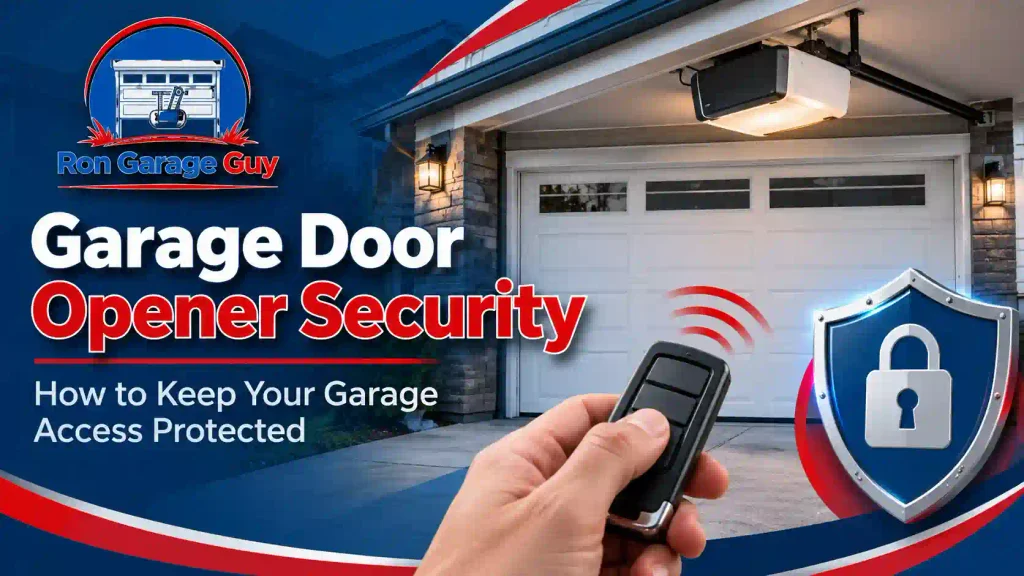
You can use your garage door opener to help make getting in and out of your home easier, as well as help keep your garage secure. The opener can help control the opening and closing of your garage door, which plays a role in helping to protect the system from being tampered with. Before learning more about how you can improve the security of your opener, it’s important to know these things first.
Ron Garage Door LLC educates customers about the characteristics and habits that can be used to help create a more secure garage door system. With a variety of practical solutions available, a number of steps can be taken to enhance garage access management.
What Is Garage Door Opener Security?
The security of a garage opener refers to features, settings, and practices that prevent or deter unauthorized access to an automatic opener. Modern garage door openers have numerous features that help protect the device from being accessed by unauthorized persons, including ways to make remote entry signals more difficult to copy. Other smart security technologies allow a homeowner to monitor and control who is accessing their home’s garage.
The security of a garage door opener is not limited to features of the opener itself but also extends to the remotes, keypads, connected devices, and user access.
Why Opener Security Matters
A garage door can provide a direct entry point into a home. If an opener remote is lost, stolen, or improperly managed, someone may potentially gain access to the garage.
Using appropriate security features and keeping control of remotes and access credentials can help reduce unnecessary security risks.
Security Starts With Access Management
Homeowners should know who has access to their garage door opener. This includes family members, trusted guests, service providers, and anyone else who has been given a remote or keypad code.
When access is no longer needed, removing or changing it can help keep the system under control.
How to Secure a Garage Door Opener
Learning how to secure garage door opener systems involves several straightforward practices. Modern technology can provide useful security features, but everyday habits are equally important.
Keep Remote Controls Secure
Garage door remotes should be handled like any other device you use to gain entry into your home. Do not leave them where they can be easily found when not in use.
If a remote is lost or stolen, be sure to check your opener’s access features and make sure that it is disabled or programmed to respond only to trusted remotes.
Change Keypad Codes When Necessary
If your garage door uses a wireless keypad, avoid sharing the access code unnecessarily. When someone who previously had the code no longer needs access, changing the code can help maintain control.
Choose a code that is not easy to guess from publicly visible information.
Use the Lock or Vacation Features
Some modern garage door openers include features that can restrict remote operation or provide additional security when homeowners are away.
Check the manufacturer’s instructions to understand which options are available on your specific opener.
Rolling Code Technology and Garage Door Security
Rolling code technology is a security feature used in many modern garage door opener systems. Instead of using the same access code every time a remote communicates with the opener, the system changes the code according to its designed security protocol.
How Rolling Codes Work
A rolling-code system generates a changing signal between the remote and opener. This is intended to make it more difficult for an intercepted previous signal to be reused for unauthorized access.
The exact technology and implementation vary by manufacturer and opener model.
Why Modern Opener Technology Matters
Older garage door openers may use outdated remote-control technology. If a system is several years old, homeowners may want to determine whether its security features meet current needs.
Upgrading an opener can provide access to newer security and convenience features, depending on the selected model.
Smart Garage Door Opener Security
A smart garage door opener can connect your garage door system to a smartphone or home network, allowing features such as remote monitoring, notifications, and app-based control.
These features can provide greater visibility into garage access, but they also introduce connected-device considerations.
Monitor Garage Door Activity
Some smart systems can notify homeowners when the garage door opens or closes. This can help users keep track of activity when they are away from home.
The available notifications depend on the opener and compatible smart-home system.
Protect Your Account
Smart opener security also depends on the account used to control the device. Use a strong, unique password and enable available account-security features such as multi-factor authentication.
Keep the associated smartphone and smart-home account protected as well.
Garage Door Opener Safety
Security and safety are closely related but address different concerns. Garage door opener safety focuses on reducing the risk of injury or property damage during normal operation.
Test the Safety Sensors
Many automatic garage door systems use photoelectric safety sensors near the bottom of the tracks. These sensors are designed to detect an obstruction and prevent the door from closing normally when the safety system is triggered.
Homeowners should follow the manufacturer’s testing instructions and address any malfunction promptly.
Keep the Door Area Clear
The garage door’s operating area should remain free of people, vehicles, pets, and objects while the door is closing.
Avoid allowing children to play around the moving door or opener controls.
Pay Attention to Unusual Operation
Grinding sounds, uneven movement, delayed response, or other changes can indicate a mechanical or electrical issue. Security features cannot compensate for a door or opener that is not functioning correctly.
Professional inspection may be appropriate when an opener behaves unexpectedly.
Protect Garage Door Opener Remotes
Remote controls are an important part of opener security. A compromised remote can potentially provide access to the garage, so remote management should be part of a homeowner’s security routine.
Do Not Leave Remotes Unsecured
Avoid leaving garage remotes in locations where unauthorized people can easily access them. When possible, keep them secure when the vehicle is parked outside the home.
This is especially important for remotes that provide direct access to the garage.
What to Do With a Lost Remote
If a remote is lost, do not simply assume it will never be found by someone else. Many garage door opener systems allow homeowners to erase existing remote codes and program authorized remotes again.
Check the opener’s instructions or consult a professional to determine the correct procedure.
Remote Control Security for Modern Garage Doors
Remote control security has evolved as opener technology has advanced. Newer systems may offer encrypted or rolling-code communication, while older systems may rely on fixed codes.
Consider the Age of Your Opener
If your opener uses older technology, determine what security features it supports. A newer opener may provide additional options for remote management and access control.
The decision to upgrade should consider the opener’s age, condition, security features, and compatibility with the existing garage door system.
Manage Authorized Devices
Keep track of which remotes and access devices are programmed to the opener. Removing devices that are no longer used can help keep access limited to authorized users.
Opener Access: Who Can Open Your Garage?
Managing opener access is an important part of garage security. Homeowners should know which people and devices can operate the garage door.
Review Access Regularly
Consider reviewing programmed remotes, keypad codes, smartphone users, and other connected access methods periodically.
Remove outdated access whenever a device is replaced or a person no longer needs permission.
Be Careful With Temporary Access
If you provide access to contractors, house guests, or service providers, use temporary or limited-access options when the system supports them.
Avoid sharing permanent access credentials when temporary access is sufficient.
Common Garage Door Opener Security Mistakes
Small oversights can undermine otherwise useful security features. Avoiding common mistakes can help homeowners maintain better control over garage access.
Using an Outdated Opener
Older openers may lack newer security technologies. If the opener is outdated or no longer supported, consider having it evaluated.
Ignoring Lost Remotes
A missing remote should be treated as a potential access concern. Reprogramming the system can help prevent an unknown person from using the lost device.
Sharing Access Codes Too Widely
Garage keypad codes should only be shared with people who genuinely need access. Change the code when circumstances change.
Neglecting Smart Account Security
A connected opener depends on the security of its associated account. Use strong login credentials and available account protections.
Frequently Asked Questions
What are the ways of making garage door opener security better?
Current opener technology, secure remotes, manipulate keypad codes, review authorized users, account security with smart-home, and replace access devices as needed can enhance security.
What is rolling code technology?
With rolling code technology, the access signal that is sent between the garage door remote and opener is changed. This lowers the chance of unauthorized access by a previously used signal.
Is it safe to use a smart garage door opener?
A smart opener can offer valuable security benefits, like activity notifications and remote management. But security goes beyond the protection of the associated account, smartphone, home network, and log-in details.
What to do if you lose your garage door opener remote?
Refer to your opener instructions for instructions on how to remove and/or re-program remote controls. To avoid the lost remote from continuing to grant access, reprogram it.
When should I inspect the security of my garage door opener?
Check your remotes, keypad codes, connected users, and security options on a regular basis. It also makes sense to check access when a remote is lost or a device is replaced or a person no longer requires access.
Protecting Your Garage Access
A secure garage door system is made up of a combination of secure hardware and responsible access management. Several of these security features of garage door openers may be implemented, such as rolling code technology, remote control security, smart features, protected accounts, and regular review of who has access.
Ron Garage Door LLC can provide guidelines to homeowners on the various garage door opener solutions and address issues regarding the operation, access and security of the garage door opener. If you are looking to install a garage door opener or want to upgrade an existing one, knowing how it works and properly maintaining it will help you get the most out of the garage door system and keep access to your garage safe and convenient.